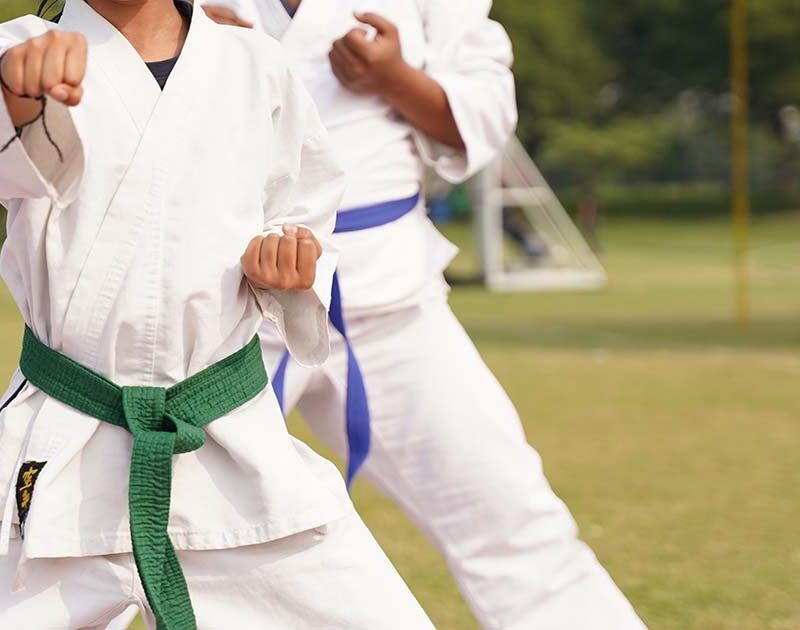
Power is a word typically associated with ippons. Each move should be done so strongly that it can break a board.
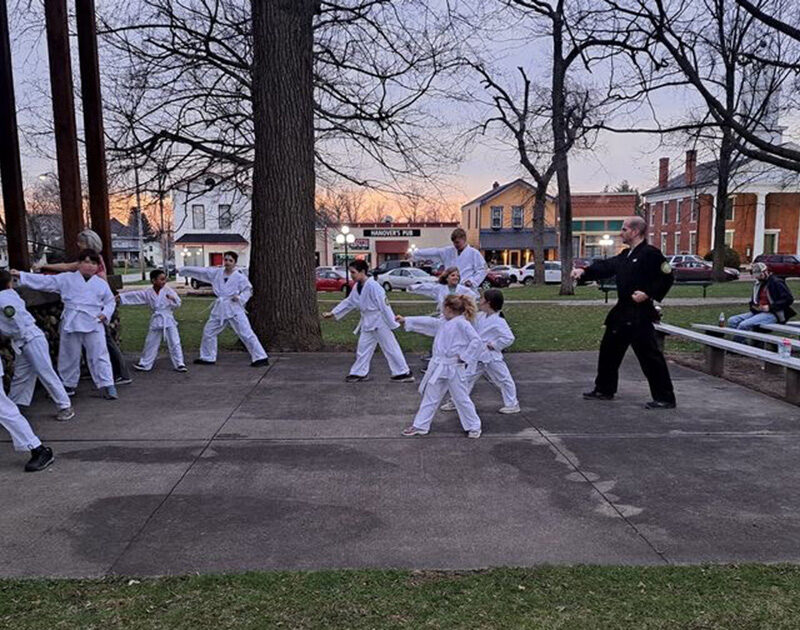
This past week, I introduced the basic class this shorter series of self-defense techniques.
The full name for an ippon is ippon kumite kata, which can be understood as point sparring form or one-step sparring drill.
Something you’ll notice about the name right away is that it contains the word kata. Kata, as you’ll know, means form. Unlike full-length katas, ippons are much shorter in length (5-8 movements, or so).
Ippons begin and end with a block in order to respond to “any possible renewal of aggression,” according to Master Trias. In other words, karateka are always aware and prepared for the next potential attack.
“While these techniques were designed primarily to develop POWER,” Master Trias writes, “each movement should be distinct, purposeful and in good form.”
Let’s break that down.
Distinct – Each technique should be clear and should not necessarily blend in with another or be executed at half-speed or power.
Purposeful – Focus your intent with your techniques and imagine what targets you are hitting.
In Good Form – Keep the power while still maintaining proper stancing and targeting. Don’t sacrifice form for power. Good form will give you power.
One of the keys that students always seem to forget is breathing. Let your breath come through your mouth. Don’t try to contain it – let it out. You can liken it to a silent kiai. Breathe out, think about destroying that board, but don’t necessarily kiai every time (though that is a drill we work from time to time).
Any questions on ippons? Post a comment here, or ask me during class!


Recent Comments